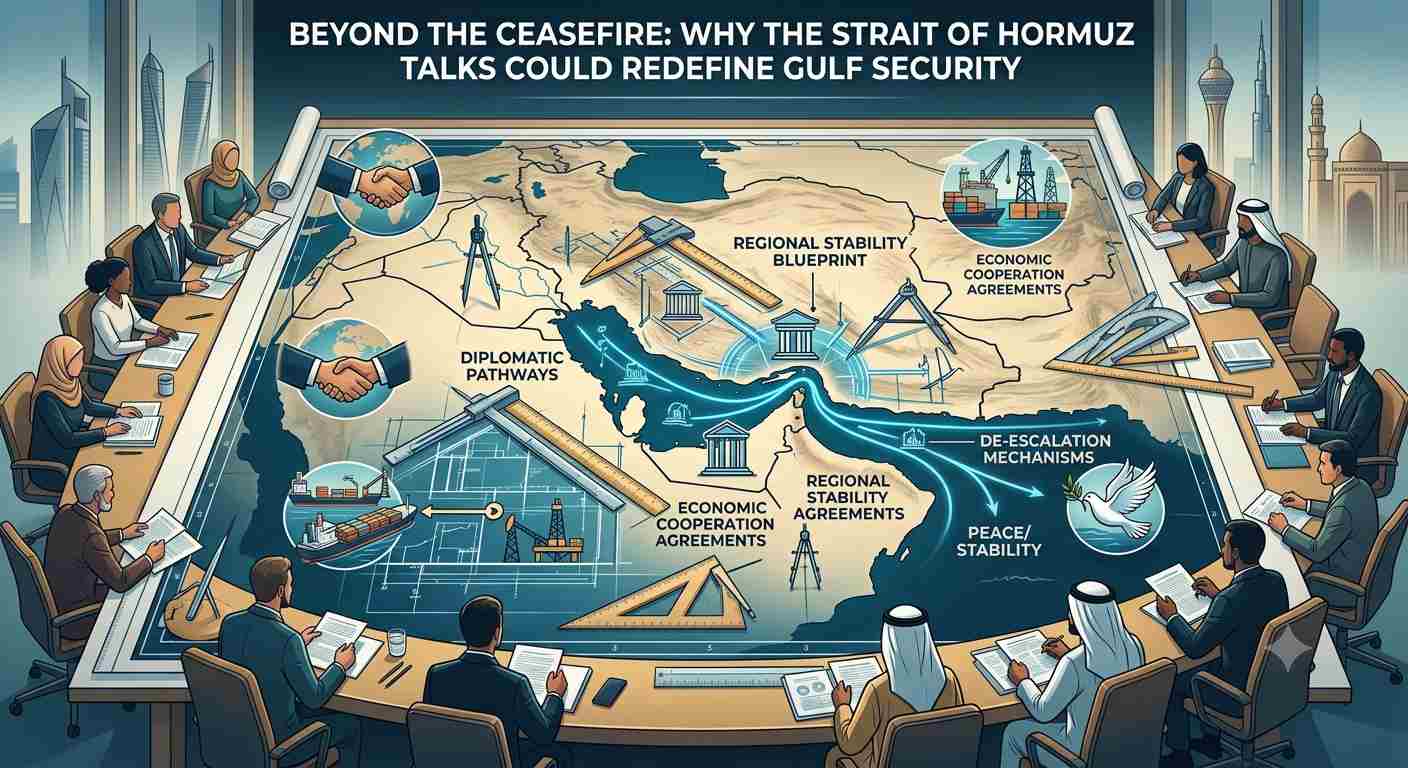
The conflict in West Asia is threatening to put another critical global shipping route under pressure.
Qatar has warned that a closure of the Bab Al-Mandab Strait, the narrow maritime gateway linking the Red Sea with the Gulf of Aden, could have consequences far beyond the Middle East.
The warning comes as Houthi forces expand their presence along Yemen’s Red Sea coast and tensions surrounding the region’s vital shipping routes continue to rise.
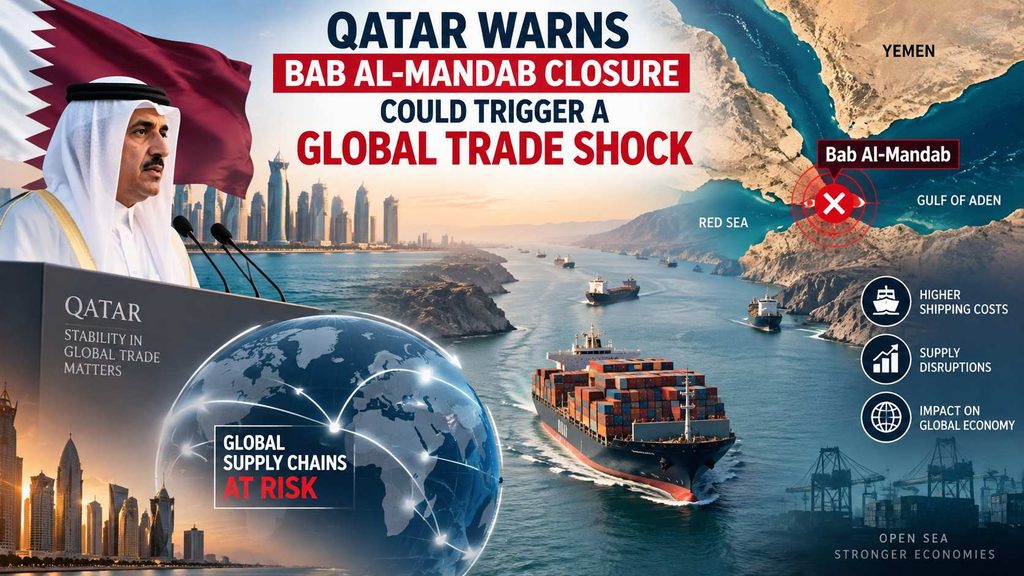
Qatar’s message is blunt: the world is already dealing with severe disruption around the Strait of Hormuz, and losing Bab Al-Mandab at the same time could create a much larger economic shock.
Why Qatar Is Raising the Alarm
Speaking in Doha, Qatar’s Foreign Ministry official Ibrahim Al-Hashmi said the world could not afford another major maritime chokepoint to become inaccessible.
His warning came as the Houthi advance along Yemen’s western coastline brought the group closer to controlling important positions around Bab Al-Mandab.
Qatar is urging diplomacy and dialogue, arguing that international waterways cannot be allowed to become permanently disrupted as a consequence of the wider regional conflict.
The concern is not limited to countries bordering the Red Sea.
Bab Al-Mandab sits on a shipping route connecting the Indian Ocean with the Red Sea and, ultimately, the Suez Canal. Any prolonged disruption could therefore affect ships travelling between Asia and Europe.
The Second Chokepoint Problem
The significance of Qatar’s warning becomes clearer when Bab Al-Mandab is viewed alongside the Strait of Hormuz.
Hormuz is already facing severe disruption amid the wider Iran-related conflict. Qatar argues that adding another major maritime blockage would multiply the pressure on global trade and energy markets.
In other words, the world could be facing a situation where two strategically important maritime gateways are simultaneously under serious pressure.
That would make the current crisis considerably more complicated for shipping companies, energy producers and governments around the world.
Why Bab Al-Mandab Matters to Global Shipping
Bab Al-Mandab may be relatively narrow, but its importance is enormous.
The strait connects the Gulf of Aden to the Red Sea. Ships travelling between Asian and European markets through the Suez Canal generally rely on this maritime corridor.
When the route becomes too dangerous, shipping companies can choose to sail around the southern tip of Africa instead.
But that alternative comes with a cost.
Longer voyages mean additional fuel consumption, increased insurance expenses and longer delivery times. The effects can eventually reach businesses and consumers far away from the battlefield.
Earlier Houthi attacks in the Red Sea had already encouraged many shipping companies to avoid the area and take longer routes around Africa.
Houthi Advances Raise the Stakes
Qatar’s warning follows a series of significant developments on Yemen’s Red Sea coast.
Houthi forces have captured the strategic port city of Mocha and expanded their presence around islands near Bab Al-Mandab, including Perim and the Hanish islands, according to recent reports.
These developments have strengthened the group’s position around one of the world’s most important maritime corridors.
The situation has also increased pressure on Saudi Arabia, which supports Yemen’s internationally recognised government.
The Houthis have launched attacks against Saudi territory and Saudi-linked shipping, while Riyadh has warned that it will respond firmly.
That creates the possibility of further escalation along the Red Sea coast.
A Problem for Saudi Arabia’s Oil Exports
Bab Al-Mandab is particularly important for Saudi Arabia because the kingdom has been trying to maintain alternative routes for its oil exports while shipping through Hormuz remains disrupted.
Saudi Arabia’s East-West pipeline can transport crude from the country’s eastern oil fields toward Red Sea ports, allowing shipments to bypass Hormuz.
But oil tankers leaving those Red Sea ports still need to pass through Bab Al-Mandab if they are travelling toward markets accessible through the Suez route.
That means a serious disruption at Bab Al-Mandab could undermine one of the alternative routes available to Saudi Arabia.
The Economic Effects Could Travel Far Beyond the Region
A prolonged closure would not necessarily mean that global trade stops completely.
Ships could still take alternative routes.
The problem is that those routes are considerably longer.
That creates a chain reaction: longer journeys can mean higher shipping costs, higher insurance premiums, greater fuel consumption and delays in the movement of goods.
Energy markets could also react to concerns about supply disruptions.
Recent reporting has already linked the wider regional turmoil to rising oil prices and growing concerns about global energy supplies.
For countries that import large quantities of fuel and goods, those additional costs can eventually contribute to inflation.
Qatar Is Calling for Diplomacy
Rather than calling for another military response, Qatar is emphasizing negotiations.
Al-Hashmi said Doha is working with regional and international partners to support discussions around freedom of navigation and the broader regional crisis.
The message is that maritime security cannot be treated as an isolated military problem.
If shipping routes remain open, the economic consequences can potentially be contained. If multiple chokepoints become inaccessible at the same time, however, the disruption could become much harder to manage.
Why This Matters for the World
The most important feature of the latest development is its geography.
A conflict in Yemen might initially appear to be a regional security issue. But Yemen sits beside one of the world’s most important maritime corridors.
That makes developments on its Red Sea coastline relevant to countries thousands of kilometres away.
Factories in Asia, European importers, energy companies, shipping firms and consumers can all potentially feel the effects when ships are forced to take longer routes.
The conflict therefore has the potential to transform from a regional military confrontation into a global logistics problem.
The Bigger Warning Behind Qatar’s Statement
Qatar’s warning is ultimately about more than one strait.
It highlights how vulnerable the global economy is when major maritime chokepoints become caught up in geopolitical conflicts.
Hormuz is already under severe pressure. Bab Al-Mandab is now facing its own security crisis.
If both routes remain disrupted, governments and businesses may have to rely increasingly on longer and more expensive alternatives.
That is why Qatar is pushing for diplomacy before the situation reaches that point.
For now, Bab Al-Mandab remains a crucial focus of the wider West Asia crisis. The question is whether the escalating confrontation around Yemen will remain contained—or whether another vital artery of global commerce will become a casualty of the war.
If the latter happens, the consequences may not stop at the shores of the Red Sea. They could be felt across oil markets, shipping networks, supply chains and household prices around the world.