Wars do not end when the last explosion fades. For many families, the conflict continues through years of unanswered questions, missing loved ones, and the painful search for closure.
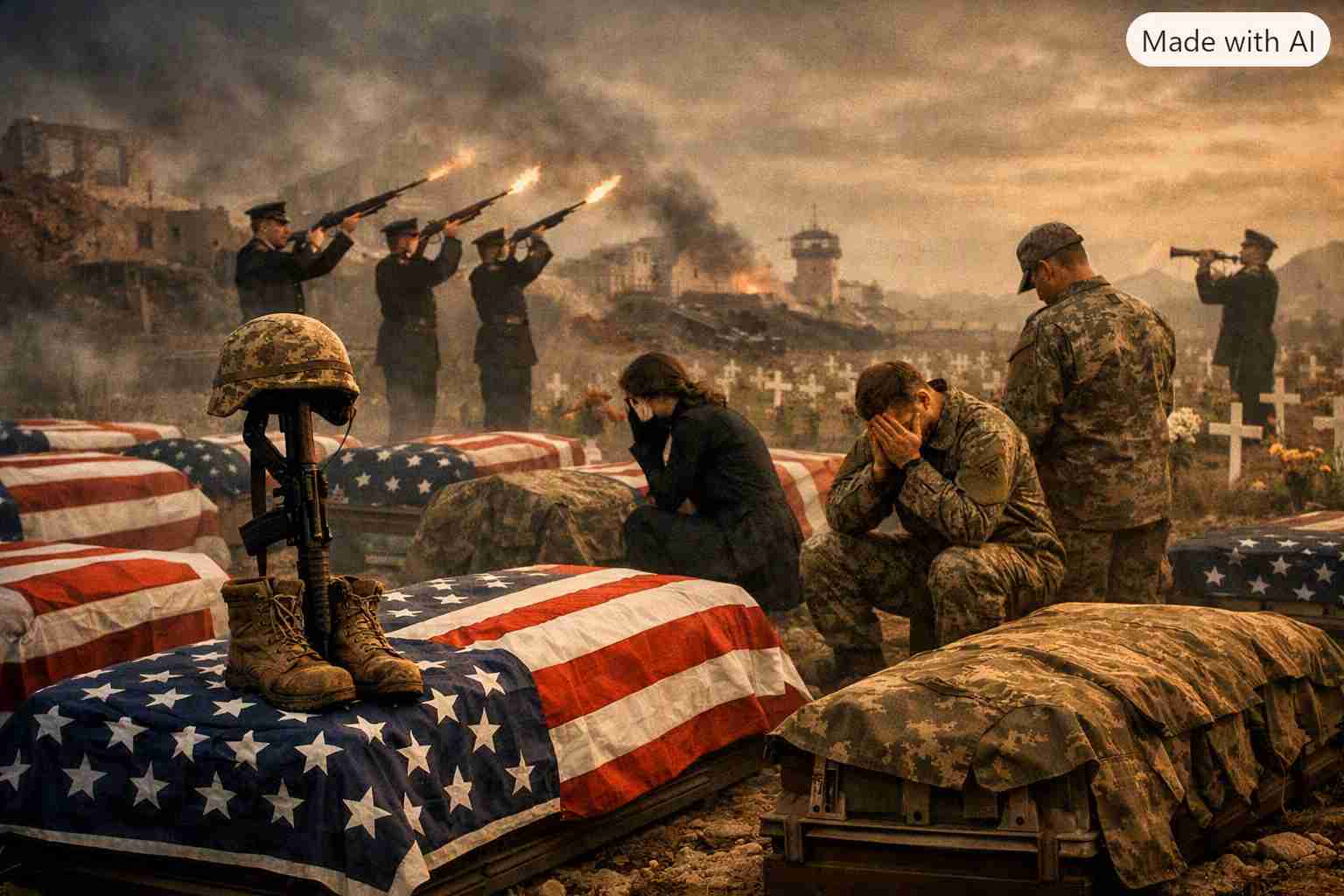
That reality was visible in Gaza, where Palestinians gathered for a mass funeral for 112 people whose remains were recently recovered from the site of an Israeli airstrike carried out in 2023. The ceremony marked the end of a long recovery effort that allowed families to finally bury relatives who had remained beneath the rubble for years.
The event was not only a moment of mourning. It highlighted one of the least visible consequences of modern warfare: the enormous challenge of recovering, identifying, and returning victims after prolonged conflict.
While military operations often dominate international headlines, humanitarian recovery can continue long after active fighting subsides.
The End of Fighting Does Not End Human Suffering
When buildings collapse during armed conflict, recovery operations often become impossible until security conditions improve.
Damaged infrastructure, unexploded ordnance, limited access to heavy equipment, and continuing violence can delay rescue and recovery efforts for months or even years.
As a result, many families live in uncertainty, not knowing whether missing relatives are alive or where they may be buried.
The recent funeral reflects how the emotional consequences of conflict frequently outlast military operations.
Recovering Victims Is a Humanitarian Responsibility
International humanitarian organizations emphasize that locating, identifying, and respectfully burying those who die during conflict is an essential obligation.
Recovery teams often work under extremely difficult conditions, carefully searching destroyed buildings while preserving evidence that may later assist identification efforts.
For families, receiving confirmed remains allows mourning to begin.
Without that certainty, grief often remains suspended indefinitely.
Identification Can Take Years
Recovering bodies is only one part of the process.
Forensic specialists may rely on DNA testing, personal belongings, medical records, and family information to identify victims, particularly when remains have been buried beneath collapsed structures for extended periods.
This work demands patience, scientific expertise, and close cooperation with affected families.
Every successful identification restores part of a person’s identity and history.
Funerals Offer More Than Farewell
Mass funerals serve several purposes beyond religious or cultural tradition.
They allow communities to mourn collectively, acknowledge shared loss, and provide public recognition to individuals whose deaths may otherwise remain anonymous.
Such ceremonies also help preserve historical memory, ensuring that victims are remembered as people rather than statistics.
In societies affected by prolonged conflict, remembrance itself becomes part of recovery.
War Leaves Invisible Damage
The physical destruction of conflict is often immediately visible.
Less obvious are the psychological effects experienced by survivors, families, rescue workers, and entire communities.
Years of uncertainty surrounding missing relatives can create prolonged emotional trauma, delaying healing even after violence decreases.
Mental health support therefore becomes an important element of post-conflict reconstruction.
Reconstruction Involves More Than Buildings
Rebuilding damaged homes, schools, hospitals, and roads is only one aspect of recovery.
Communities must also rebuild public records, family connections, educational opportunities, healthcare services, and local institutions.
The recovery of missing victims forms an important part of restoring social stability because it helps families complete an essential process of mourning and remembrance.
International Humanitarian Law Addresses Missing Persons
International humanitarian law contains provisions concerning the respectful treatment of the dead and efforts to account for missing persons during armed conflict.
Humanitarian organizations continue encouraging all parties in conflicts to facilitate recovery operations whenever conditions permit.
These principles seek to reduce long-term suffering regardless of the political or military circumstances surrounding a conflict.
Memory Becomes Part of History
Events such as the Gaza funeral remind the international community that the human consequences of war continue long after headlines change.
Each recovered victim represents an individual life, a family story, and a community affected by violence.
Remembering those experiences contributes to historical understanding while reinforcing the importance of preventing future conflicts.
The Bigger Picture
The mass funeral for 112 recovered victims illustrates how the effects of war extend far beyond the battlefield.
Long after military operations conclude, families continue searching for loved ones, recovery teams continue working through destroyed neighborhoods, and communities continue rebuilding both physically and emotionally.
The ceremony also demonstrates that humanitarian recovery is not simply about clearing rubble. It is about restoring dignity, providing answers, and allowing families the opportunity to mourn with certainty rather than uncertainty.
As conflicts around the world continue generating displacement and destruction, the work of recovering and identifying victims remains one of the most important yet least recognized aspects of humanitarian response.
Ultimately, the significance of this funeral lies not only in the number of people laid to rest but in what it represents: the enduring responsibility to account for every life lost, to support those left behind, and to recognize that the true cost of war is measured not only in military outcomes but also in the lives forever changed by its consequences.
For many families, peace does not begin with a ceasefire. It begins when they are finally able to bring their loved ones home.