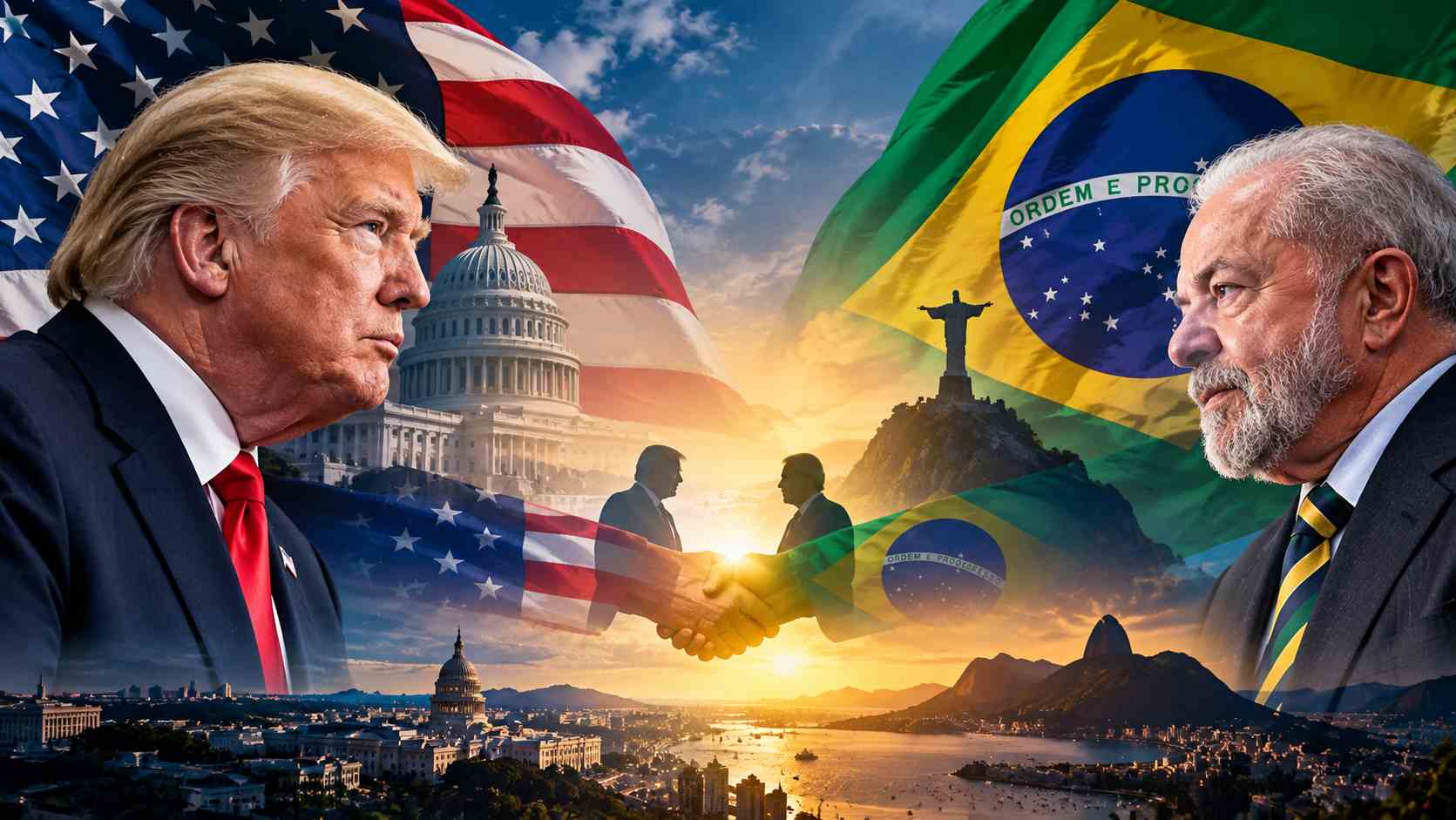
A dispute over how Americans cast their ballots has opened another confrontation between President Donald Trump and the US Supreme Court, just weeks before the country’s 2026 midterm elections.
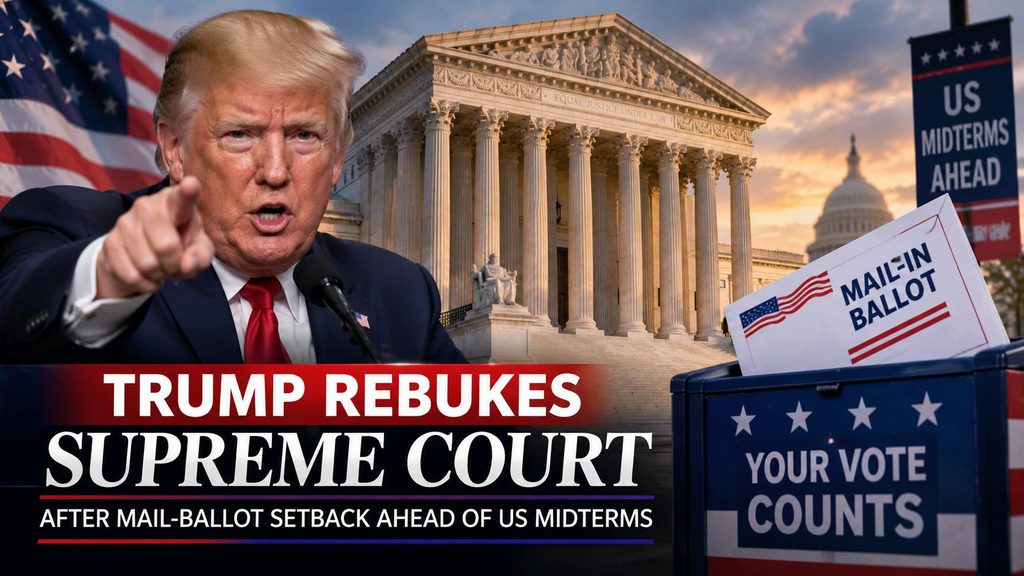
The Supreme Court on Monday refused the Trump administration’s request to immediately revive new restrictions on mail-in voting. The decision means the disputed rules will not take effect for this year’s midterm elections while the broader legal battle continues.
Trump responded angrily, directing his criticism at the justices—including members of the court whom he himself nominated.
In a social-media post, Trump questioned the justices’ decisions and said of those who ruled against his administration, “these are not the people I interviewed.” He also accused the court of failing to act with what he described as the necessary courage to protect the country.
The episode highlights a larger question now surrounding the US election system: How much authority can the federal government exercise over voting procedures that have traditionally been administered by the states?
What the Supreme Court Actually Decided
The court’s decision is narrower than Trump’s reaction might suggest.
The justices did not issue a final ruling declaring all of the administration’s proposed mail-voting restrictions unconstitutional.
Instead, they rejected the administration’s request for emergency relief that would have allowed the new rules to take effect before the November election. The underlying legal challenge remains unresolved.
That distinction is important because the immediate consequence is mainly about timing.
With ballots already being prepared and distributed in some states, election officials had argued that introducing a new federal system so close to the election could create serious logistical problems.
Why Mail-In Ballots Became the Center of the Dispute
The Trump administration had sought tighter federal controls over mail-in voting.
Among the disputed requirements were changes involving ballot envelopes and the collection and verification of voter information. The administration argued that additional controls were necessary to protect election integrity.
State and local election officials challenged the changes, saying there was not enough time to implement a new system before the midterms and warning that existing election procedures could be disrupted.
The disagreement therefore involves two competing concerns: how to strengthen election safeguards and how to avoid disrupting an election system that is already operating.
A Timing Problem for Election Officials
The timing of the proposed changes became one of the central issues in court.
Mail voting does not happen only on Election Day. Ballots may be requested, printed, mailed, returned and processed weeks before voters go to polling stations.
That means election administrators need substantial preparation time.
The administration’s proposed changes arrived while states were already moving toward the November election, creating concerns that election offices would have to redesign established procedures with little time to test them.
The Supreme Court’s decision leaves those existing procedures in place for the 2026 midterms.
Trump Turns His Anger Toward His Own Appointees
Perhaps the most striking part of the dispute is Trump’s criticism of justices he appointed.
Trump has previously expressed frustration when Supreme Court decisions have gone against major parts of his administration’s agenda. Recent disagreements have included cases involving birthright citizenship and presidential tariff powers.
The latest case has therefore revived a recurring feature of Trump’s relationship with the judiciary: his willingness to publicly criticize judges even when some of them were selected by him.
His comments also underscore an important feature of the US constitutional system.
Once appointed and confirmed, Supreme Court justices do not serve as representatives of the president who nominated them. They decide cases independently and serve lifetime terms.
Only Two Justices Dissented
The Supreme Court’s unsigned order was not unanimous.
Justices Clarence Thomas and Samuel Alito dissented from the decision, while the other justices allowed the lower-court restrictions to remain in place for the upcoming election. Trump praised the two dissenting justices after the ruling.
The split is significant because it demonstrates that the disagreement was not simply between the administration and a uniformly opposing court.
The justices themselves differed over whether the administration should receive emergency relief.
The Administration Says It Will Follow the Decision
Despite Trump’s criticism, the administration has indicated that it will comply with the Supreme Court’s order.
Attorney General Todd Blanche said the administration would follow the ruling, even as officials continue pursuing the underlying legal case.
That distinction separates political criticism from the legal effect of the ruling.
Trump can challenge or criticize the decision publicly, but the administration remains bound by the court’s order unless a later ruling changes the legal position.
Why the Decision Matters for the 2026 Midterms
The immediate impact is practical.
States can continue using their existing mail-in ballot procedures for this year’s midterm elections rather than attempting to implement the disputed federal requirements immediately.
For voters who choose to vote by mail, that means the procedures already established by their states remain the operative framework for the November election.
The ruling also prevents an abrupt change to election administration just as preparations are intensifying.
But the Legal Battle Is Not Over
The Supreme Court’s emergency decision does not necessarily end the dispute.
The underlying questions about the federal government’s authority to impose the proposed mail-ballot requirements can continue through the courts.
That means the administration could still pursue the policy in future elections if it succeeds in the broader litigation or develops a different legal approach.
The consequences could therefore extend beyond the 2026 midterms.
A Larger Fight Over Who Controls Elections
At the heart of the controversy is a longstanding question in American elections: Who gets to set the rules?
The federal government has important responsibilities involving federal elections, but states traditionally play a major role in registering voters, distributing ballots and administering elections.
The administration’s attempt to establish additional nationwide requirements has therefore produced a broader constitutional and administrative debate.
The mail-ballot case is one example of how disagreements over election rules can quickly become disputes over the balance of power between Washington and the states.
The Bigger Story Is About Institutional Boundaries
The latest clash is about much more than mail delivered to voters.
It touches three separate institutions at once: the White House, the courts and state election authorities.
The White House wants stricter federal control over certain voting procedures. State officials have raised concerns about implementation and election administration. The courts are being asked to determine whether the administration can impose the changes and whether they can take effect so close to an election.
Trump’s response adds another dimension by placing the independence of judges themselves at the center of the political conversation.
For voters, however, the immediate message is simpler: the Supreme Court has blocked the administration’s proposed mail-ballot changes from taking effect for the 2026 midterms, while the larger legal dispute continues.
As November approaches, the case will remain closely watched—not only because of its impact on mail voting, but because it could help define how far presidential power can reach into the administration of US elections.