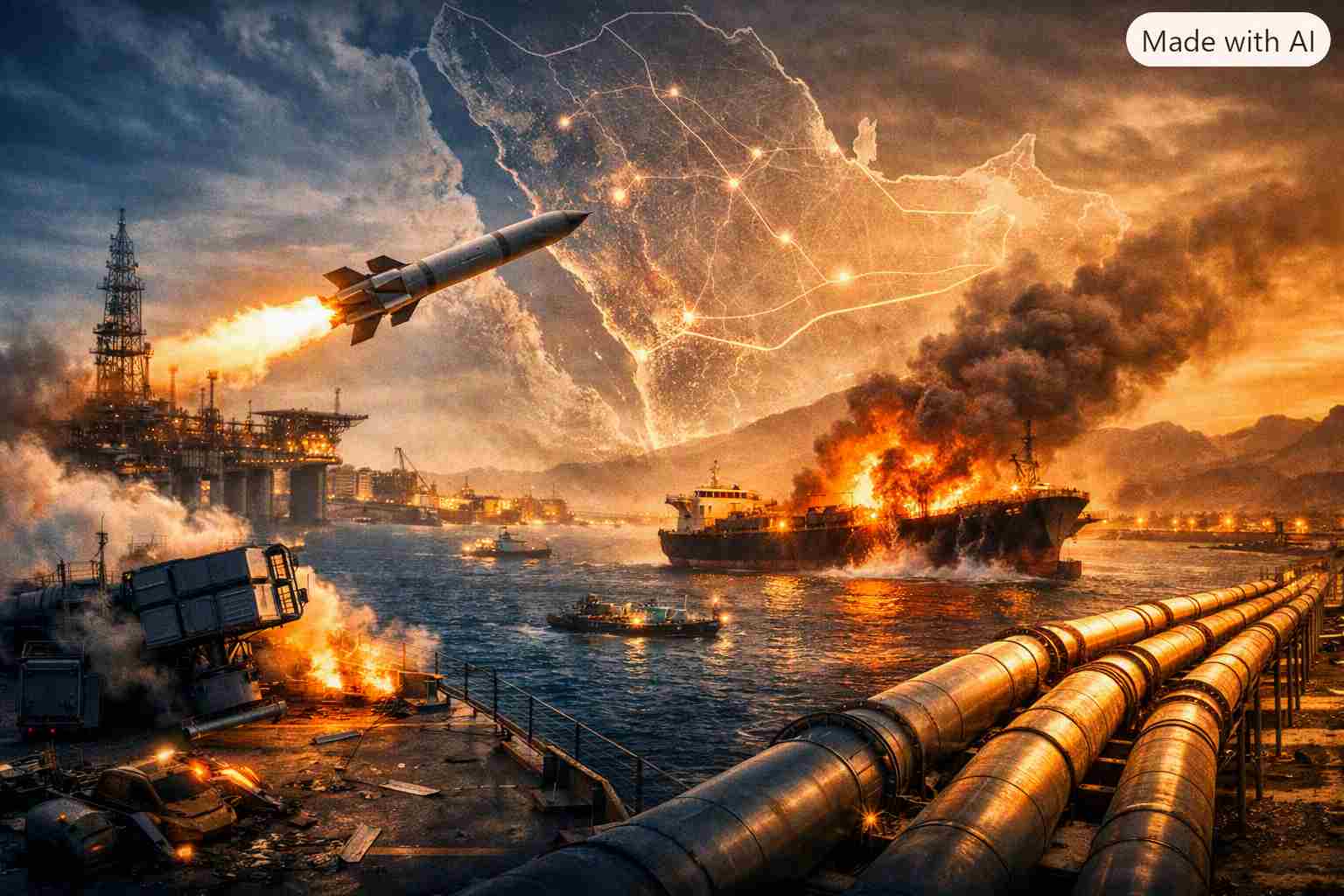
Modern conflicts are no longer confined to military bases or front-line battlefields. Increasingly, they extend to airports, ports, power stations, and transportation networks that keep nations functioning every day.
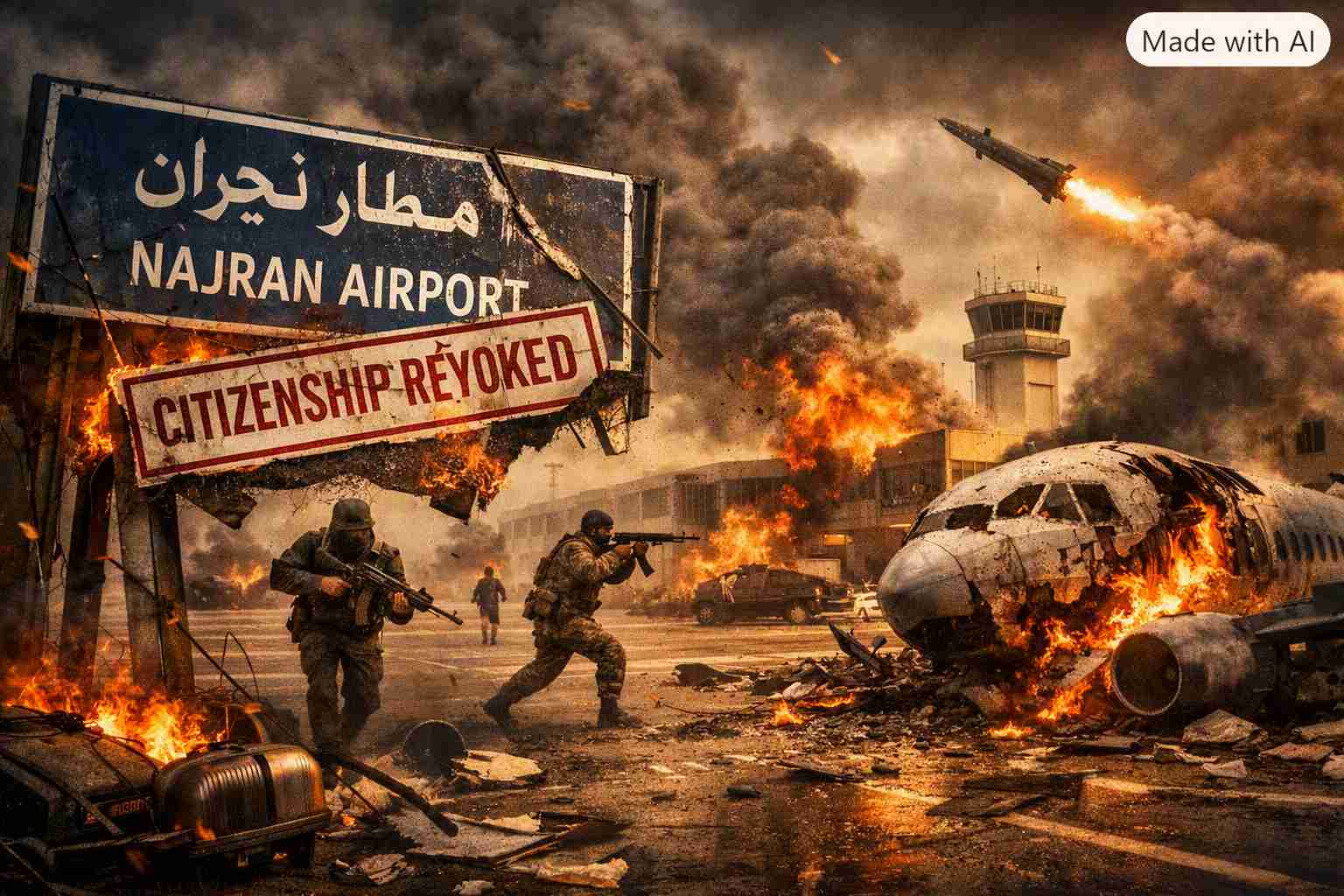
The reported Houthi attack on Najran Airport in southern Saudi Arabia, which led to a temporary suspension of operations, illustrates this changing character of warfare. While airports are primarily associated with civilian travel and commerce, they have also become strategically significant because they support emergency services, logistics, economic activity, and, in some cases, military operations.
Although flights were suspended following the reported attack, authorities moved quickly to assess the situation and implement safety measures. The incident demonstrates how even a brief disruption at a regional airport can generate wider concerns about transportation security, economic stability, and public confidence.
Modern Warfare Increasingly Targets Infrastructure
Contemporary conflicts are evolving beyond traditional military engagements.
Rather than concentrating exclusively on armed forces, many conflicts now involve attacks on infrastructure that supports national economies and public services.
Airports, energy facilities, communication systems, and transportation corridors have become important strategic assets because disrupting them can produce consequences far beyond the immediate physical damage.
The Najran incident reflects this broader transformation.
Airports Are More Than Transportation Hubs
Airports serve multiple functions within a country’s infrastructure.
They facilitate passenger travel, cargo movement, emergency medical transport, disaster response, and commercial trade.
Even regional airports contribute to local economies by supporting tourism, business activity, and supply chains.
Temporary service interruptions therefore affect more than scheduled flights.
They can also influence commercial operations, regional connectivity, and emergency preparedness.
Aviation Security Faces New Challenges
The growth of drones, missiles, and long-range precision weapons has fundamentally changed aviation security planning.
Traditional airport protection focused largely on internal threats and passenger safety.
Today, authorities must also prepare for risks originating well beyond airport boundaries.
Governments are increasingly investing in advanced radar systems, missile-defense technologies, surveillance networks, and rapid emergency response capabilities to protect critical aviation infrastructure.
Regional Conflicts Can Affect Civilian Transportation
Although military objectives often dominate strategic planning, civilian infrastructure frequently experiences indirect consequences.
Temporary airport closures may delay humanitarian flights, medical evacuations, business travel, and cargo operations.
Such disruptions illustrate how regional conflicts increasingly affect everyday civilian activities even outside active combat zones.
Maintaining transportation resilience has therefore become an important component of national security.
Economic Confidence Depends on Operational Stability
Infrastructure disruptions influence financial confidence as well as transportation.
Businesses rely on predictable logistics, investors monitor operational stability, and insurance companies continuously assess regional risks.
Even short interruptions at transportation facilities can affect commercial planning if uncertainty persists.
For governments, restoring normal operations quickly is therefore important both economically and symbolically.
The Psychological Impact Matters Too
Strategic attacks often aim to create uncertainty in addition to physical damage.
Public concern about transportation safety can influence travel decisions long after facilities reopen.
Maintaining clear communication, rapid emergency response, and transparent safety procedures helps strengthen public confidence during such incidents.
Trust becomes an important element of resilience.
Technology Is Reshaping Defense Planning
Protecting airports today requires integrating multiple technologies.
Air-defense systems, electronic surveillance, cyber protection, satellite monitoring, and real-time intelligence sharing all contribute to safeguarding critical infrastructure.
Modern security increasingly depends on technological coordination rather than physical barriers alone.
Investment in these capabilities continues expanding across the Middle East.
Diplomacy Remains Essential Alongside Security
Strengthening airport defenses can reduce vulnerabilities, but it cannot eliminate the underlying political tensions driving regional conflict.
Long-term stability ultimately depends on diplomatic engagement, confidence-building measures, and sustained regional dialogue.
Infrastructure protection addresses immediate risks, while diplomacy seeks to reduce the likelihood of future attacks altogether.
Both approaches remain necessary.
The Bigger Picture
The reported disruption at Najran Airport demonstrates how regional conflicts increasingly affect civilian infrastructure that underpins everyday economic and social activity.
Although the immediate operational impact may prove temporary, the incident reinforces the growing importance of protecting transportation networks against evolving security threats.
It also illustrates a broader shift in modern warfare. Strategic influence is no longer measured solely by territorial control or battlefield outcomes. The ability to disrupt logistics, transportation, and public confidence has become an increasingly significant element of contemporary conflict.
Ultimately, the significance of the Najran incident extends beyond one airport or one attack. It highlights how aviation security, infrastructure resilience, and regional stability have become closely interconnected in an era where conflicts increasingly reach beyond traditional military front lines.
As governments strengthen defensive capabilities, the longer-term challenge will remain balancing robust security with continued efforts toward diplomatic solutions capable of reducing the risks that critical civilian infrastructure faces in the first place.