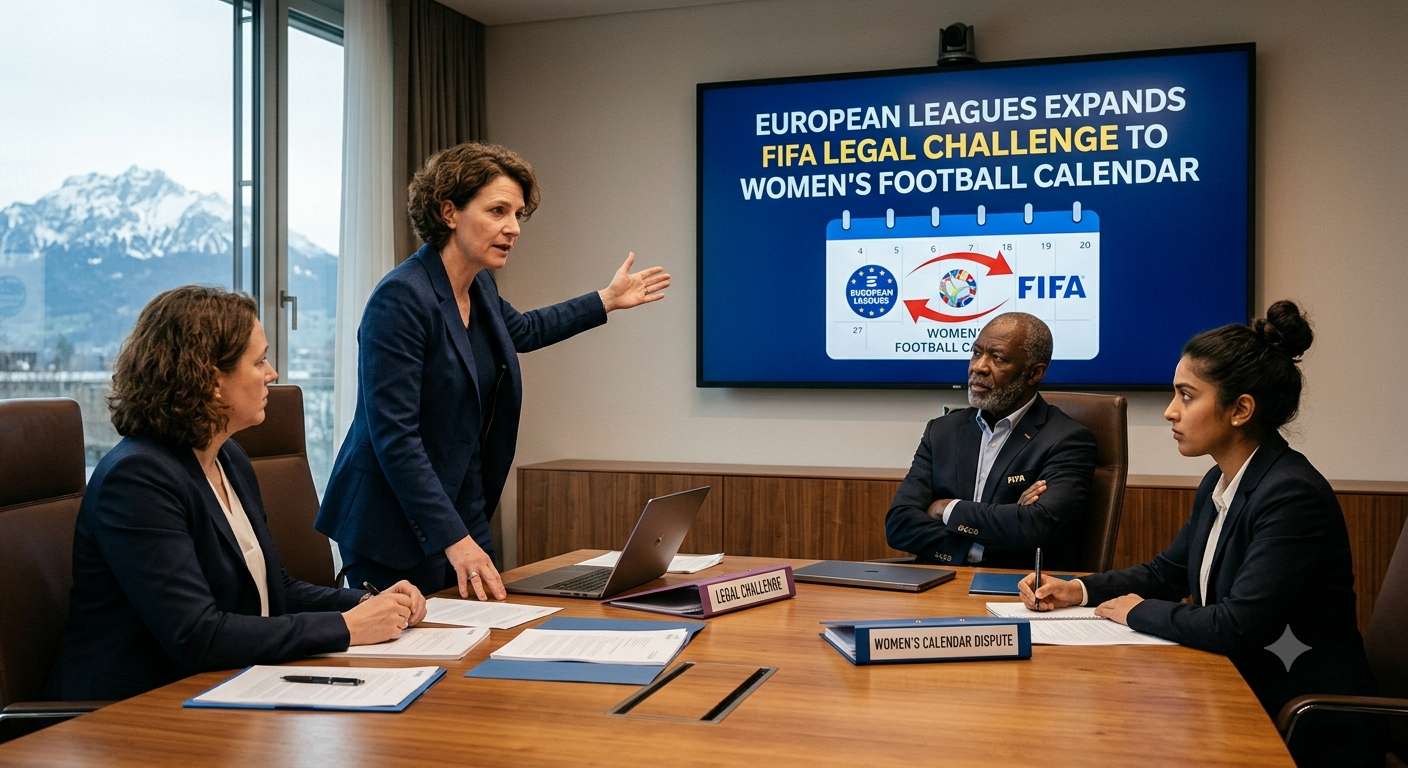
European football’s growing dispute with FIFA has moved further into women’s football, with European Leagues extending its legal complaint over the international match calendar to include concerns about the governing body’s decisions affecting the women’s game.
European football is facing another major debate over who should have the strongest voice in determining the future of the sport, and this time the issue extends well beyond the men’s game.
European Leagues, an organisation representing professional leagues and clubs across the continent, has expanded its complaint to the European Commission to include what it describes as FIFA’s “abusive conduct” concerning the women’s international match calendar and related regulatory decisions.
The organisation argues that FIFA’s role as both the global governing body and organiser of major competitions creates a structural conflict of interest. It says decisions affecting the women’s calendar have not involved sufficient participation from professional leagues and could have consequences for competition, player welfare and the financial development of domestic football.
The complaint builds on legal action already brought over FIFA’s handling of the men’s international calendar. European Leagues originally joined forces with player representatives to challenge FIFA’s approach in October 2024, arguing that the global football calendar was becoming increasingly crowded and that important decisions were being made without meaningful consultation with those directly affected.
Women’s football becomes a central part of the dispute
The latest development is significant because the professional women’s game is expanding rapidly across Europe. Domestic leagues are attracting larger audiences, broadcasters are investing more heavily and clubs are increasing spending on women’s teams.
European Leagues says that growth could be placed under pressure if the international calendar is organised in a way that gives priority to FIFA competitions while creating additional disruption for domestic competitions.
According to the organisation, the same concerns that have been raised about the men’s calendar are now relevant to women’s football. Those concerns include player workload, scheduling congestion, the financial interests of domestic leagues and the influence FIFA has over the structure of international competition.
European Leagues has asked the European Commission to examine whether FIFA’s regulatory decisions comply with European Union competition law. The organisation argues that FIFA should make decisions through transparent, objective and proportionate processes, particularly when its own commercial competitions may compete with domestic football.
The complaint does not represent a final legal ruling against FIFA. Instead, it places greater pressure on European authorities to examine how football’s international calendar is created and whether governing bodies have sufficient safeguards against conflicts of interest.
The calendar question is becoming more complicated
Scheduling has become one of the most sensitive issues in modern football.
Players now face increasingly demanding seasons involving domestic leagues, European competitions, international matches and expanded tournaments. For clubs, the calendar affects travel, player availability, finances and preparation. For national teams, international windows remain essential for qualifying campaigns and major tournaments.
Women’s football faces many of the same challenges, although the structure of the game is different from the men’s side.
European domestic competitions have grown in importance, while international tournaments and FIFA competitions are also expanding. The result is a complicated balancing act involving national associations, leagues, clubs and players.
The challenge is particularly important for leading clubs whose players regularly compete on multiple fronts. A change in the international calendar can influence domestic league fixtures, European competition schedules and the availability of key players.
European Leagues believes professional leagues should have a meaningful role in those decisions rather than simply adapting after global regulations have already been established.
FIFA rejects escalation as the preferred approach
FIFA has responded by defending its approach and stressing the importance of consultation and cooperation.
The governing body has said it prefers dialogue and agreement with stakeholders rather than legal escalation. FIFA has also pointed to recent cooperation with player representatives on reforms to the global transfer system as evidence that consensus can be reached between different parts of football.
The organisation has also indicated that discussions surrounding the women’s international calendar will continue as the women’s game develops and new stakeholders become involved.
That response suggests FIFA does not view the dispute as a simple confrontation between the governing body and European leagues. Instead, it is attempting to present the calendar as an issue that requires continued consultation as international women’s football becomes larger and more commercially significant.
A wider power struggle in global football
The dispute over the women’s calendar comes during a broader period of tension surrounding FIFA’s governance and commercial plans.
In recent months, FIFA has faced criticism over its proposals involving private investment in its competitions. The proposed FIFA Forward Enterprise initiative was ultimately abandoned after generating substantial opposition from football organisations and other stakeholders.
Those disagreements have contributed to a wider discussion about FIFA’s responsibilities as the regulator of global football and as the organiser of some of the sport’s most valuable competitions.
Critics argue that those two roles can sometimes create competing priorities. FIFA, on the other hand, maintains that its commercial activities help finance football development around the world.
The latest complaint means the disagreement is no longer focused solely on men’s football. Women’s football is increasingly becoming part of the debate over how the international game should be governed.
What happens next?
The European Commission will now have to consider the expanded complaint and determine whether further examination is appropriate.
That process could take time, and the submission itself does not establish that FIFA has broken EU competition law. However, the legal challenge adds another layer of scrutiny at a moment when international football is undergoing significant structural changes.
The outcome could also have implications beyond the immediate dispute.
If European authorities conclude that governing bodies must introduce stronger safeguards around calendar decisions, football organisations could face greater pressure to include leagues, clubs and player representatives in future scheduling discussions.
For women’s football, the issue carries particular significance. The game is entering a period of commercial and competitive growth, and decisions made today could influence how sustainable that growth becomes over the next decade.
The central question is increasingly straightforward: who should decide the shape of professional football’s future — the global governing body, the domestic leagues, the clubs, the players, or some combination of all of them?
For now, the disagreement between European leagues and FIFA appears far from settled. What began as a dispute over an already crowded football calendar is developing into a much broader argument about governance, commercial interests, player welfare and the direction of the modern game.
And with women’s football now firmly included in the legal challenge, the stakes have become considerably higher.