
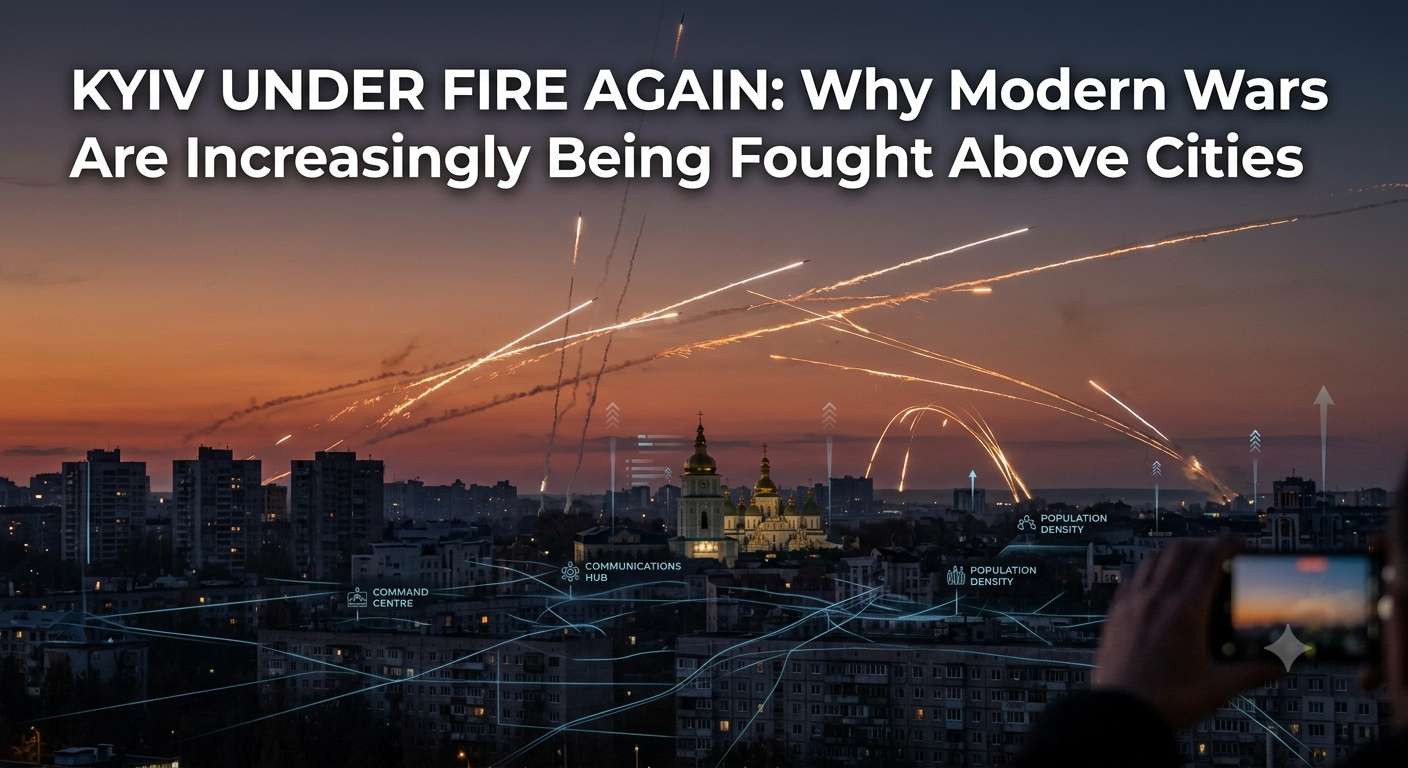
Wars were once largely defined by battles between opposing armies on distant front lines. Increasingly, however, the most devastating moments occur hundreds of kilometers away from active combat, where missiles strike cities, infrastructure, and civilian neighborhoods within minutes.
The latest Russian ballistic missile attack on the Kyiv region, which left at least 14 people dead and 27 injured, illustrates how urban centers have become central to the conflict. The overnight assault damaged residential areas, warehouses, and logistics facilities, triggering large fires and another massive emergency response.
While Russia has stated that its strikes targeted infrastructure supporting Ukraine’s military operations, Ukrainian authorities say civilian areas suffered significant damage. As with many attacks during the conflict, the competing narratives highlight the complexity of verifying events while the war continues.
Beyond the immediate destruction, the strike reflects a broader shift in modern warfare—where protecting cities has become as strategically important as defending battlefields.
Cities Have Become the New Front Line
Modern conflicts increasingly place civilians at the center of military operations.
Long-range ballistic missiles, cruise missiles, and drones allow military targets far from traditional front lines to be reached within minutes.
As a result, warehouses, transport hubs, industrial facilities, power infrastructure, and nearby residential neighborhoods often become part of the same operational environment.
For civilians, this means that geographical distance from active combat no longer guarantees safety.
Ballistic Missiles Present a Unique Challenge
Unlike slower drones, ballistic missiles travel at extremely high speeds and descend rapidly toward their targets.
This gives air-defense systems only a brief window to detect, track, and intercept them.
Even countries with advanced defensive capabilities face significant challenges in stopping every incoming missile.
The latest attack has renewed discussion about the importance of maintaining sufficient air-defense resources to protect densely populated urban areas.
Air Defense Is Becoming a Strategic Resource
The effectiveness of a nation’s defense is increasingly measured not only by offensive capabilities but also by its ability to protect civilians.
Ukraine has repeatedly emphasized the importance of advanced missile-interception systems capable of countering ballistic threats.
Military analysts note that air-defense inventories, production capacity, and international support now play an increasingly important role in determining the resilience of cities during prolonged conflicts.
Protection from above has become as critical as security on the ground.
Logistics Are Central to Modern Warfare
Reports indicate that warehouses and logistics facilities were among the damaged sites.
Modern militaries rely heavily on transportation networks, storage centers, rail infrastructure, and supply hubs to sustain operations.
Disrupting these facilities can affect both military logistics and civilian commerce.
Because many logistical networks support both civilian and defense-related activities, attacks often create broader economic consequences beyond immediate physical damage.
Emergency Services Become a Second Line of Defense
After every major strike, firefighters, medical personnel, engineers, and rescue workers immediately become part of the national response.
Their work often continues for many hours as they extinguish fires, search damaged buildings, restore utilities, and assist displaced residents.
These emergency services have become an essential element of national resilience during prolonged conflicts.
Saving lives after an attack is now as important as preventing one.
Infrastructure Has Become a Strategic Target
Modern warfare increasingly focuses on systems that keep cities functioning.
Electricity networks, transportation facilities, communication systems, warehouses, and industrial sites all contribute to national resilience.
Damage to these assets can disrupt daily life, economic activity, and emergency operations simultaneously.
The conflict demonstrates how infrastructure has become an integral part of contemporary military strategy.
Civilian Resilience Shapes National Strength
Repeated attacks place enormous psychological pressure on local communities.
Despite ongoing risks, many cities continue operating schools, businesses, hospitals, and public services.
This resilience has become an important factor in sustaining national morale during prolonged conflict.
Governments increasingly recognize that protecting civilian confidence is an essential component of overall national security.
The War Continues to Evolve
The Russia-Ukraine conflict has demonstrated how rapidly military technology continues changing.
Precision-guided missiles, long-range drones, electronic warfare, satellite intelligence, and advanced air-defense systems now influence strategic outcomes alongside traditional ground operations.
Future conflicts are likely to involve an even greater integration of these technologies.
Urban security will remain central to military planning.
The Bigger Picture
The latest strike on the Kyiv region illustrates how modern conflicts increasingly affect civilians living far from conventional battlefields.
Beyond the immediate casualties and physical destruction, the attack highlights the growing importance of air-defense capabilities, resilient infrastructure, and emergency response systems in protecting urban populations.
The incident also reinforces a broader lesson emerging from conflicts around the world: military success is no longer determined solely by territorial gains. The ability to safeguard cities, maintain essential services, and sustain public confidence has become equally significant.
Ultimately, the true measure of resilience lies not only in rebuilding damaged structures but also in preserving the functioning of society under extraordinary pressure. As missile technology continues to evolve, defending civilian life has become one of the defining challenges of twenty-first-century warfare.